Our Programmes

education_icon

Education

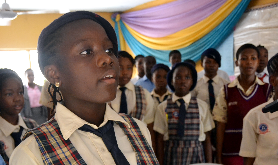
In collaboration with the World Bank Group Staff Community Connection Project, Ajoke Ayisat Afolabi Foundation (AAAF) presented 12-unit HP Desktop Computers to Layeni L. A. Primary School, Boundary Ajegunle. The intervention, which was part of efforts to promote the actualisation of SDGs 4 and 9, increases access to computers to a ratio of 147 pupils per computer from 342 pupils to one computer in public primary schools at Ajeromi Ifelodun LGA, Lagos state. The ceremony was witnessed by representatives of the WBG.IFC, Ifeoma Johnson, Lagos State Universal Basic Education Board (SUBEB), Mrs.H.A. Sofowora, , Ajeromi Ifelodun LG Education Secretary, Mrs. J. F. Oyetunde, Teachers, Parents and Students of Layeni L.A. Primary School and Ogunlade Primary School, Boundaty, Ajegunle

More than 10.5million Nigerian children are out of school (UNICEF) with over 800,000 children forced to flee their homes as a result of the conflict in northeast Nigeria. Similarly, an assessment conducted in 2015 by nigerianeducation.com on out-of-school children in Nigeria, indicates, 90.8 percent of eligible early childhood pupils, 30 percent of primary school pupils, 65 per cent of junior secondary school students, and 61 per cent of senior secondary school students are out of school. To address the roadblock to quality education, therefore, Ajoke Ayisat Afolabi Foundation (AAAF) leverages a combination of classroom and field approaches to boost learning for children living in resource poor households.

In a bid to promote access to quality education for orphans and vulnerable children (OVC), the AAAF launched a variety of interventions in the sector. These include;

Support A Child with Knowledge to reduce Poverty (SACK-Poverty) project– A scholarship scheme that helps over 300 students transit from primary through secondary to tertiary institutions of learning annually. Since 2008, the scheme has provided equal opportunity to OVCs across Nigeria, irrespective of ethnicity and religious affiliation. So far, over One Hundred Million Naira (N100,000,000) has been invested to keep more than ten thousand (10,000) students in school, and abate incidences of out-of-school due to loss of breadwinners. Most of the AAAF beneficiaries are children of widows, orphans and other vulnerable children.

National Essay and Spelling-bee Competition– The AAAF recognize that in addition to the experience of self-motivation, children learn also learn through exploration and coping techniques adopted. Accordingly, the competition was designed to promote out-of-classroom interaction and learning for Junior and secondary schools students. While the essay writing is intended to propel scholarship in the areas of policy advocacy and acquaint senior secondary school students with emergent issues, the spelling bee competition is aimed at promoting lateral thinking at junior secondary school level. The maiden edition, which held in 2016 had the theme;

Education in Nigeria: Effectively managing the Issues of Abuse, Violence and Security

empowerment_icon

Empowerment and Inclusion

inclusion

AAAF considers empowerment as very essential to promoting gender equality and inclusion and as such designed the Vocational Skills Acquisition Programme (VSAP) totargets building the skills of widows, persons with disabilities and other vulnerable persons in a range of capacity development programmes.

Vocational Skills Acquisition Project (VSAP): Is an intervention geared towards creating productive, financial and marketing opportunities for women, especially widows, persons with disabilities (PWD) and the youth. VSAP is a 6 weeks to 12-months training programme, which offer vocational and entrepreneurial skills plus grant opportunities for beneficiaries. Graduate of the scheme are automatically enrolled into the AAAF Multipurpose Cooperative Society to leverage the societies thrift, credit and marketing prospects for business development.

Objectives

The objectives of this project include to;

  • equip beneficiaries with such skills that would enable them to be self-employed or gain wage employment
  • make participants to be self-reliant.
  • Create business clusters
  • Create robust thrift and credit processes
  • The objectives of this project include to;

The target population includes:

  • Women of reproductive age, especially widows benefitting from existing AAAF programmes
  • persons without formal education
  • school leavers and school dropouts
  • persons with special needs and fresh graduates from tertiary institutions who desire to acquire functional and marketable skills.

Overall, the project aims to promoted business startups and financial inclusion for vulnerable persons, particularly widows and persons with disabilities operating within the informal sector through series of skills and grants. Women in Production Project (WIPP) and Women in Agriculture are key components of the VSAP

health_icon

Health

health

Beneath every statistics lies the pain of human tragedy, for several household devastated by the loss of loved ones. Even more distressing is the knowledge that, according to recent research, essential interventions reaching women and their families on time would have averted most of the deaths. Expectedly, households are desirous of family members living healthy without medical illnesses, possibly to a ripe old age, however, the World Health Organisation (2013) puts Nigeria’s life expectancy ratio at 54/55, m/f. This aligns with the AAAF findings on a sample of 100 widows, which suggest that while 65 percent were widowed between the ages of 40 and 50 years, 23 and 12 percent are between 30 – 40 and 20-29 years respectively. Incidentally, our study identified non-communicable diseases and road accidents as the highest causes of death.

Non-communicable diseases (NCDs) are slowly progressive, and can last for a very long time. Although they can occur in any age group, they occur more frequently in those advancing in age, usually above 40 years. They are also very common in the sub-Saharan part of Africa, threatening not only the health of the population at large, but also the economy. According to a global study in 2013, NCDs accounted for 60% of all deaths, and also accounted for twice as many deaths as HIV/AIDS, Tuberculosis, Malaria, Hepatitis and all other communicable diseases combined. Typical examples of these NCDs include Hypertension, Diabetes, Stroke, and others.

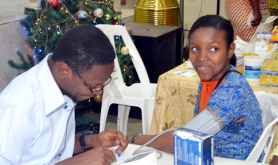
Accordingly, the AAAF support medical screening through periodic community medical outreaches and missions across Nigeria. With inputs from professional health workers, over 500 women and children (annually) are offered a range of health services to reduce the incidences of malaria, diabetics, hypertension, and poor eye sights. As advocates for widows, OVCs and persons with disabilities, AAAF health interventions include counseling, linkage to legal aid and maternal and child healthcare services particularly for women widowed during pregnancy or with under-5 infants.

disability_icon

ability in disability

In addition to providing financial and mobility support for persons with disabilities (PWDs), the AAAF in partnership with relevant agencies and organizations advocates for the optimization of the full potential of PWDs using a combination of right-based and people-centred approaches to elicit equitable rapid economic growth. Through seminars/workshops, this project specifically equips persons with disabilities to analyse their own situations, exercise their rights, and hold decision makers accountable.